
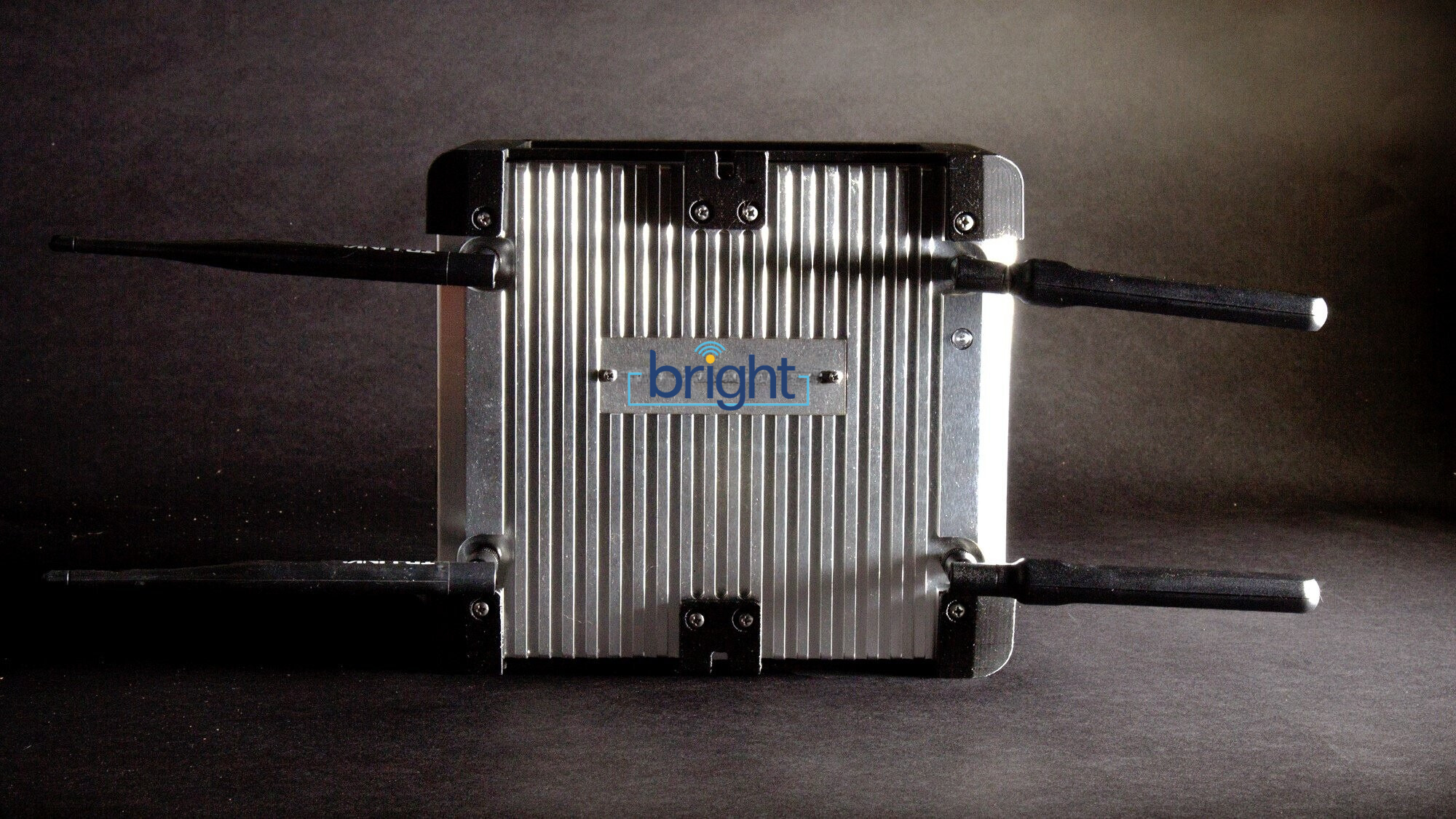
Across Africa, health facilities face a persistent challenge: without reliable infrastructure, even the most advanced digital solutions can fall short. As countries accelerate the adoption of electronic medical records (EMR) and national health platforms, power outages, spotty connectivity, and the challenge of supporting hundreds of clinics remain daily realities.
Palladium and b Inc are coming together to address these barriers.
Formalised this month, this partnership is built on a shared conviction that digital health transformation only works when it’s designed for the real world. Built to perform in resource-constrained environments, not just boardrooms, but is practical, resilient, and scalable, even in resource constrained environments.
Turning Vision into Reality
b Inc brings its bright box hardware, a purpose-built digital infrastructure solution that combines solar power, battery backup, redundant connectivity, and local edge computing in a single unit optimized for low resource health facilities. The bright box enables clinics to operate critical digital health systems even when grid power or internet access is unreliable.
“For us,” says Deborah Theobald, founder and CEO of b Inc, “Bright box is about removing the most fundamental barriers to digital transformation. By pairing reliable power with secure computing and connectivity, we ensure clinics can actually use the tools they have.”
Drawing on decades of experience in large-scale digital health implementation, systems integration, and government partnership, Palladium is leading deployment, local adoption of bright box, integration with national health information architectures, and ongoing support.
“Together, we’re rolling out bright box units to support the national EMR platforms in Ethiopia, the Democratic Republic of Congo, and Cote d’Ivoire, and coordinating with Ministries of Health to align bright box deployments with national EMR and digital health strategies,” explains Palladium’s COO Llyr Rowlands. He underscores the importance of the partnership’s value in promoting electrification. “Health facilities cannot rely on digital tools without addressing the foundational issue of power reliability.”
Built for Scale and Sustainability
This partnership is grounded in proven outcomes not just pilots. The bright box infrastructure has already been deployed in more than 900 health facilities across multiple African countries, supporting over 400,000 patient interactions and training more than 1,000 health workers, with a hardware failure rate of less than one percent. These deployments have enabled faster clinical workflows, improved data quality, and more timely reporting to national systems.
“Our phased rollout strategy starts with rapid deployments using the bright box configuration,” says Teddy Berihun, who co-leads Palladium’s Digital Practice. “While those units stabilise EMR access and connectivity, we conduct facility assessments to define expanded electrification needs like cold storage, lighting, and lab equipment.”
“This way, we can introduce scaled, upgraded configurations tailored to the unique needs of each level of the health system,” Berihun explains. Training, documentation, and continuous improvement are central to the approach, empowering local teams to take ownership and drive long-term success.
A Foundation for the Future
As digital health initiatives accelerate, the need for robust, scalable infrastructure is more urgent than ever. Infrastructure cannot be treated as an afterthought—it is the foundation on which data-driven care, surveillance, and policy decision-making depend. “We’re committed to moving beyond pilot projects and creating the conditions for national and multi-country scale-up,” adds Berihun.
By addressing the infrastructure challenge directly, and aligning technology deployment with governance, capacity building, and sustainability, this partnership is opening new possibilities for data-driven care and lasting impact—ensuring that digital transformation reaches the facilities and communities where it is needed most.