
Objective
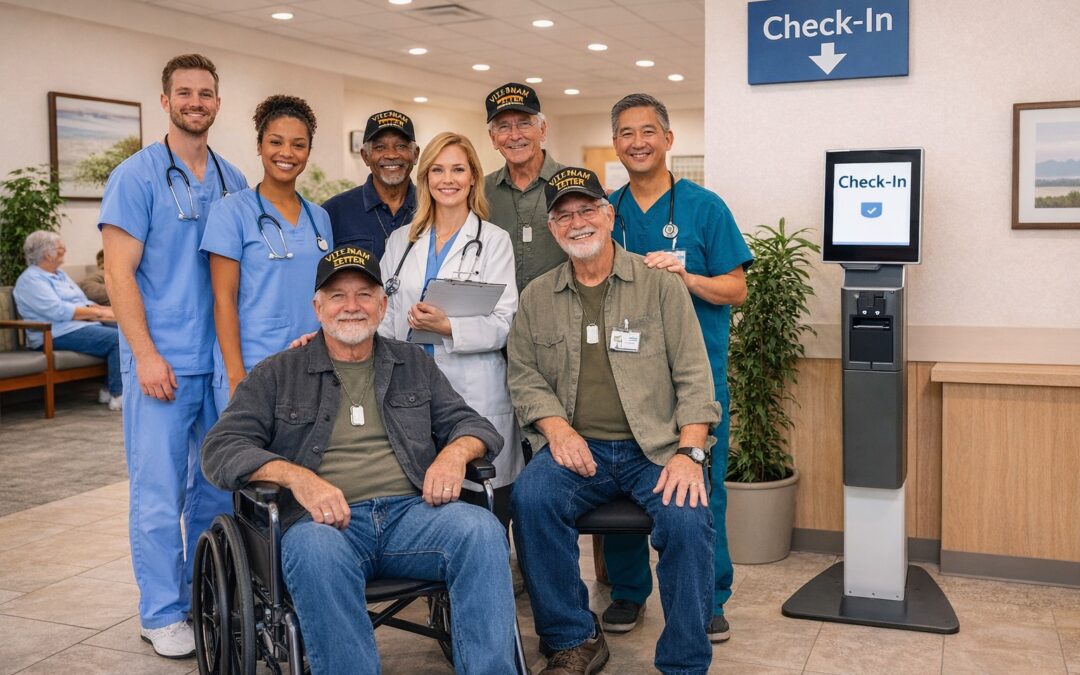
The VA Pittsburgh Healthcare System (VAPHS) sought to improve and centralize the administrative services for veterans in one main area of the medical center. The goal of the centralized business center was to allow veterans to move through the check-in process easily and swiftly, while increasing the accuracy of the patient record.
Implementation
VAPHS, in collaboration with b Inc., successfully implemented the Department of Veterans Affairs’ first comprehensive self-service pre-registration and patient check-in system. The project was implemented in conjunction with the opening of a new consolidated business service center. The system has a flexible design that easily accommodates centralized and decentralized operations and has proven to be a success at VAPHS. The patient self-service system has reduced the manual efforts and costs of checking patients in for visits and has also supported Central Office’s requirements for pre-registration.
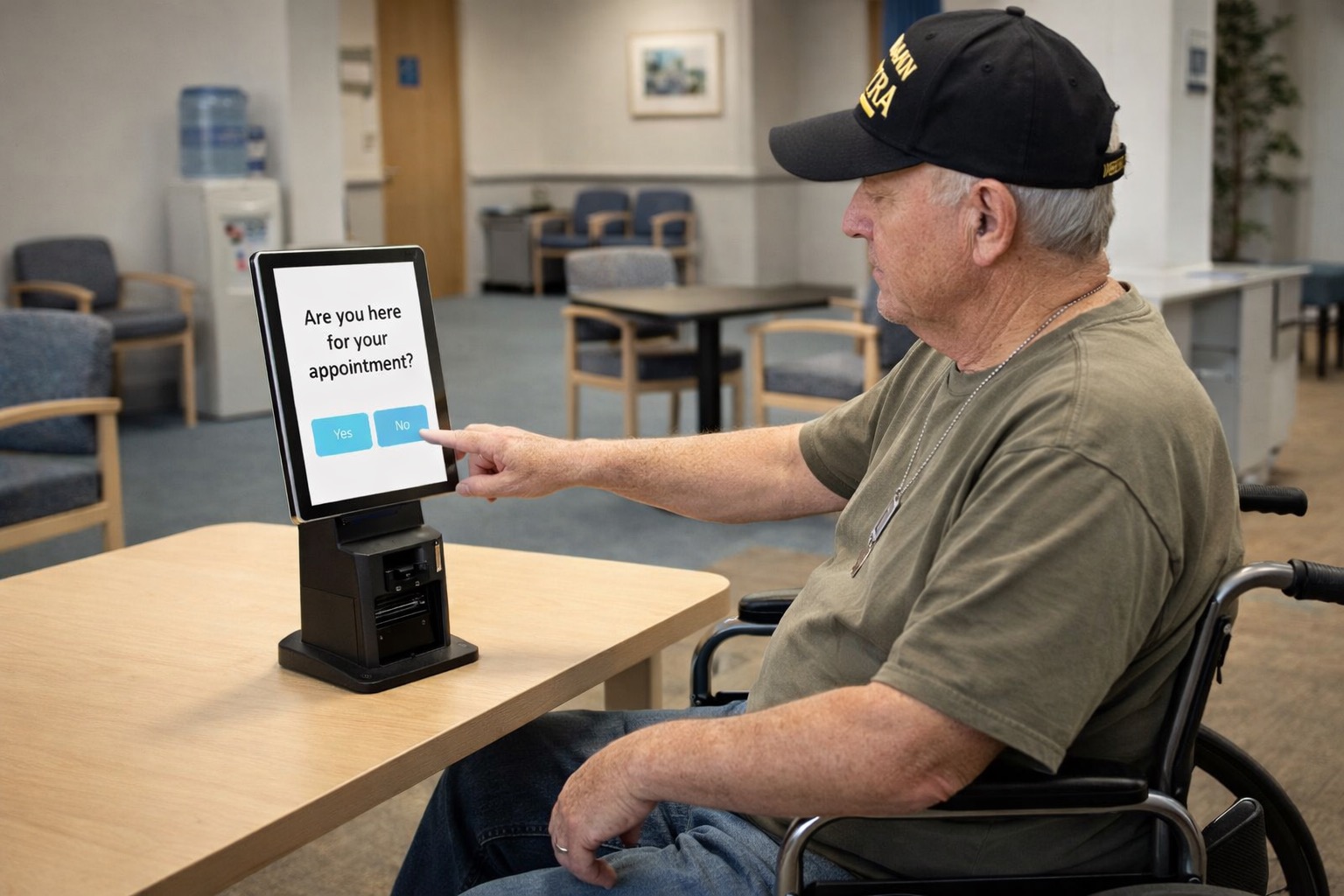
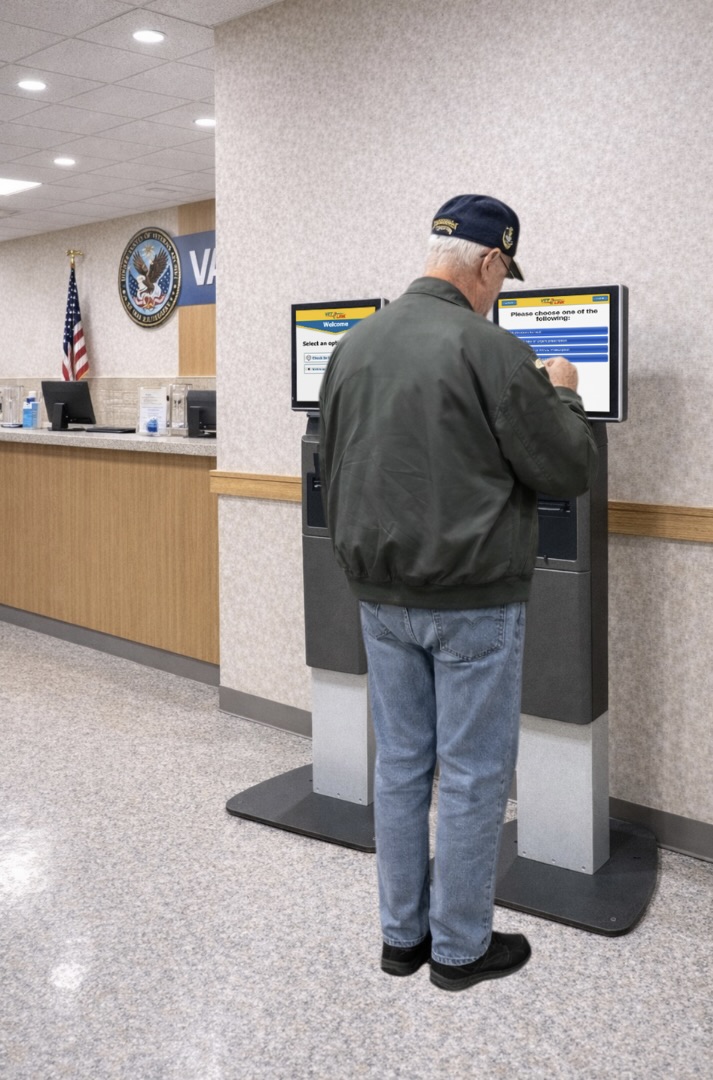
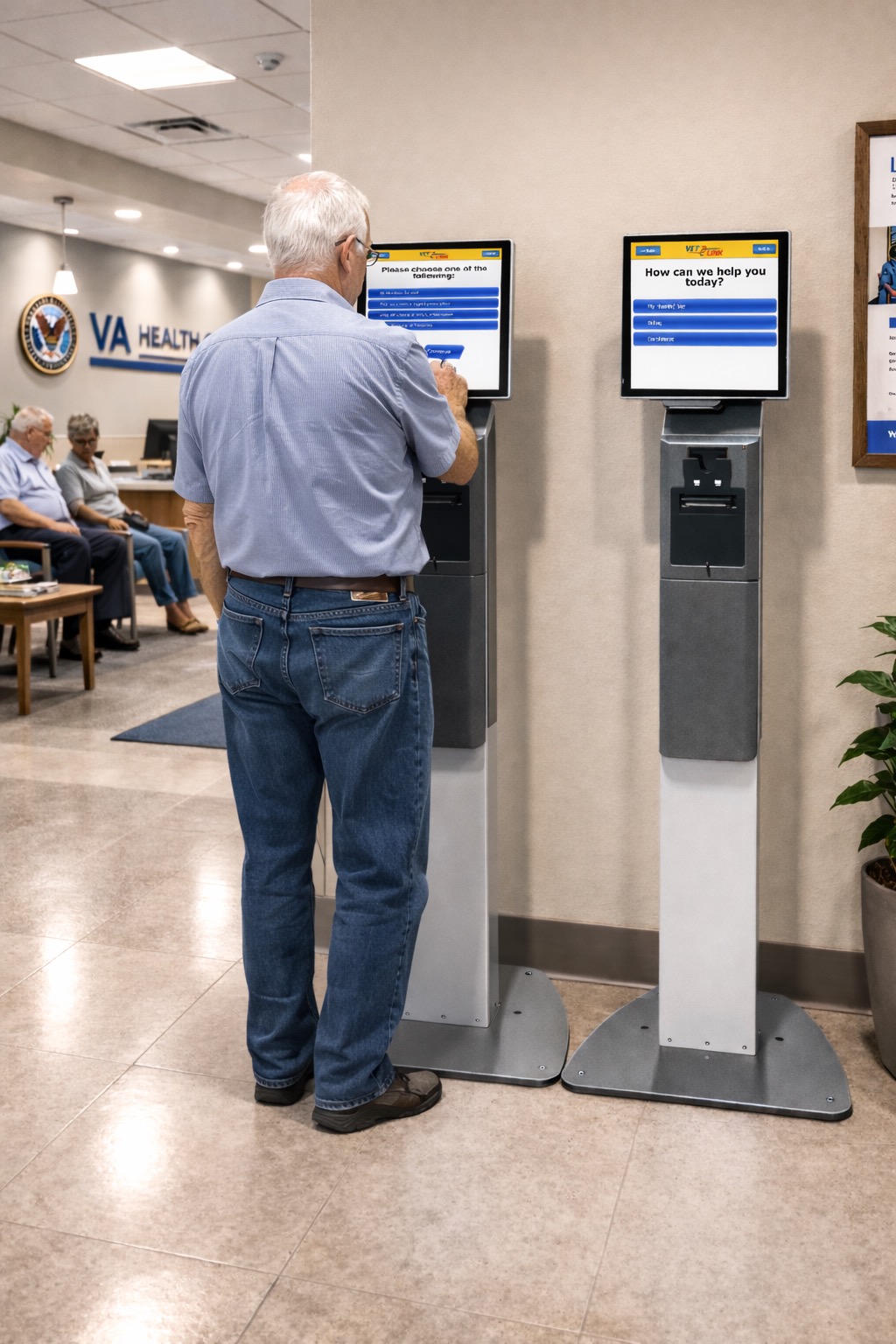
The system developed and implemented includes hardware, software, and professional services to provide integration with the VA’s VistA hospital information system.Hardware associated with this system includes free standing kiosks (which are adjustable for wheelchair patients) and desktop models. If assistance is needed, Video and audio capabilities enable veterans to reach a remote registrar are the tap of a button.
The system allows patients to self check-in for appointments by using a combination of their Veteran Identification Card and touch screen input at a kiosk. A privacy glare has been built into the screen for HIPAA guidelines to be met so that the information on the screen can only be viewed by the veteran using the kiosk.
The kiosk provides a series of prompts for the veteran and queries the patient as to correctness of demographics, insurance carrier, appointments, and other information deemed necessary by the VA. The veteran responds to each question by pressing “yes” or “no” on the screen. If the veteran identifies that updates to his information is needed, he is directed to a pre-registration clerk for assistance.
However, if no changes are needed, the veteran receives a printout of the scheduled appointments for the day and is not required to wait in line. In less than one minute a veteran can pre-register and proceed to his appointment.
The system is expandable and scalable to allow integration of additional functionality such as viewing of patient education information, signing of consent forms, administration of patient surveys, and the addition of kiosks at clinic destination locations to complete the check-in process. VA staff can view and manage patient checked-in lists, monitor patient flow through the organization, and generate various types of reports from the kiosk systems.
.
Results
The use of technology has significantly improved the pre-registration process for the veteran population and has been well received by the patients that are treated at VAPHS.




|
Correction of thousands of errors in veterans’ demographics, decreasing the volume of undeliverable mail and prescriptions, and improving no-show rates. Cost avoidance: $24,609 (annualized). |
Verifying and correcting enrollment and eligibility errors. Projected increased revenue/cost avoidance: $224,434 (annualized). |
Updating patient insurance information. Projected increased revenue: $249,934 (annualized).
|
Cost savings associated with veterans successfully passing through the kiosk. Cost avoidance: $92,113 (annualized). |
Success
The net potential gain/cost avoidance after implementation costs is $483,612 (annualized). A 95% satisfaction rate has been scored by veterans using the kiosk system.
As a result of the great success of the kiosks, VISN 4 has expanded its kiosk check-in program to its remaining medical centers.
Additionally, VISN 4 is in the process of installing the kiosks for check-in at many of the Community Based Outpatient Clinics.
Reach Out
For questions, comments, or suggestions, email the team at info@b-inc.com.